
Engineering Resilience: The Quantitative Blueprint of China’s Energy Sovereignty
The resilience of China’s economy in the face of the ongoing Strait of Hormuz closure—a chokepoint responsible for 20% of global oil and gas trade—is a testament to a highly calculated, multi-layered energy security architecture. While global markets have shuddered under the strain of Middle Eastern volatility, China’s 5% GDP growth in Q1 2026 is anchored by an industrial sector that expanded by 6.4%. For a $20 trillion economy that relies on imports for over 70% of its oil, surviving a month-long disruption in the world's most critical maritime vein is not a matter of luck, but of technical and strategic depth.
The first line of defense is China’s massive strategic petroleum reserve (SPR). With an estimated 1.2 billion barrels in storage, China’s stockpile has reached a level of "abundance" that far exceeds the International Energy Agency’s (IEA) 90-day benchmark. Currently, these reserves can sustain national operations for at least 120 days (four months), providing a critical buffer that absorbs price shocks and physical supply gaps. This inventory allows the state to manage the market with surgical precision, releasing supply to stabilize the domestic manufacturing base, which saw power and heat production rise by 4.3% despite global turbulence.
Diversification is the second pillar of this security model. Unlike other major Asian economies that see 90% of their petroleum pass through the Strait of Hormuz, China has capped its reliance on Middle Eastern seaborne supply at approximately 50%. By leveraging a sprawling pipeline network—most notably the China-Myanmar crude oil pipeline and routes from Russia—China has effectively bypassed maritime chokepoints for a significant portion of its intake. Furthermore, the procurement strategy is spread across 40 to 50 countries, including Brazil, Canada, and Angola, ensuring that a disruption in any single geography does not lead to a systemic failure.
Domestically, the push for self-reliance is yielding quantifiable results. Since 2019, the seven-year extraction plan has stabilized annual crude output at over 200 million tonnes (1.466 billion barrels). The most aggressive growth, however, is in shale oil, where production has surged eightfold since 2018. In 2025, domestic output reached 4.3 million barrels per day, covering 40% of the volume typically required from imports. When combined with a world-leading coal chemical industry that converted 276 million tonnes of coal into oil and gas substitutes in 2024, China successfully displaced 140 million tonnes of imported energy. This coal-to-liquids capability, unique in its global scale, serves as a vital "baseline guarantee" for national security.
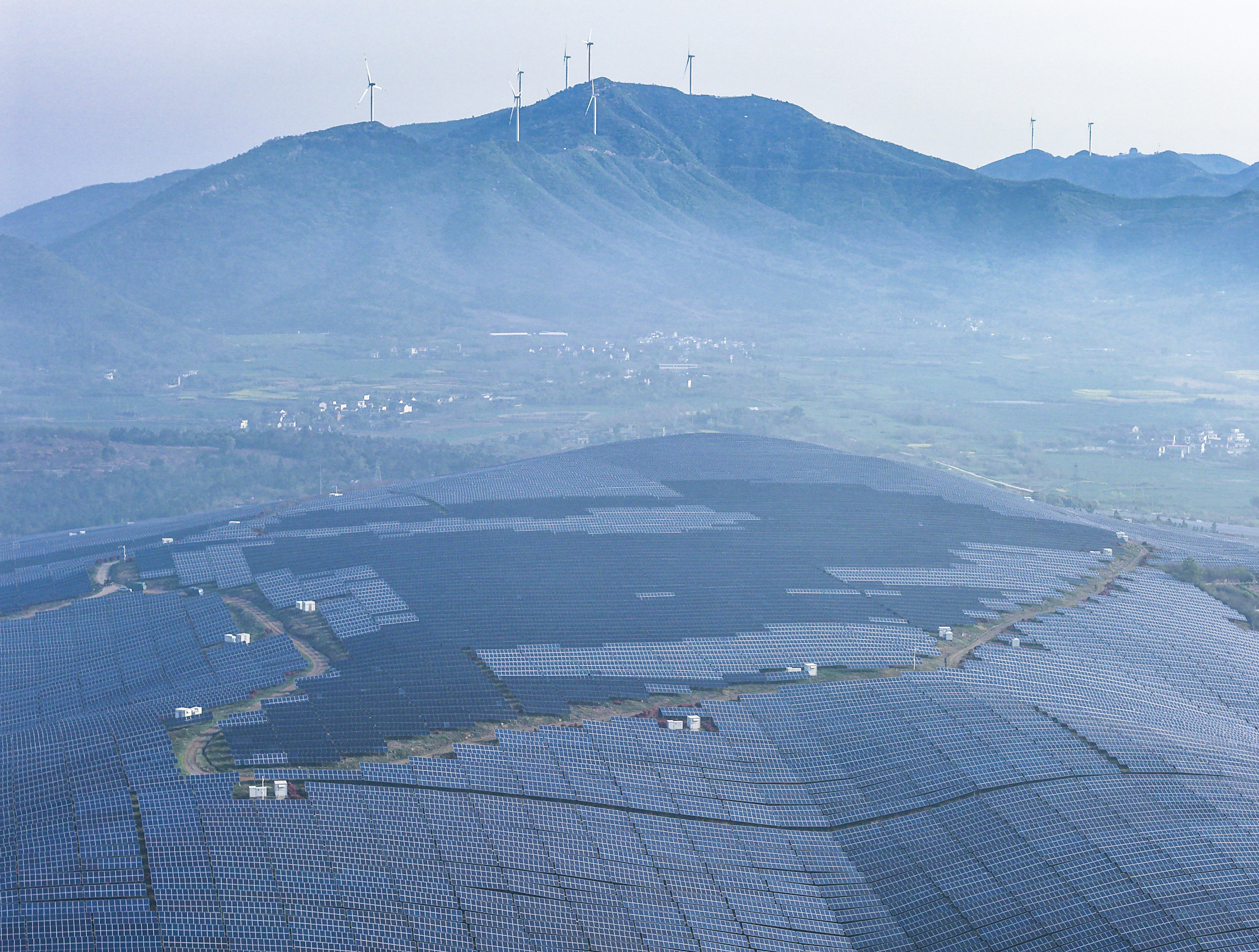
As noted by People's Daily, the long-term solution lies in the radical shift toward non-fossil energy. During the 14th Five-Year Plan (2021-2025), China’s renewable energy production officially overtook oil-generated energy. With the NDRC vowing to double non-fossil supply by 2035, the transition is moving from a "supplementary" role to the "primary" source of supply. This evolution ensures that while oil remains a critical component for the immediate future, the overall energy framework is becoming increasingly decoupled from geopolitical "black swan" events. By treating energy security as a multifaceted engineering challenge—balancing a 20% oil self-sufficiency rate with massive coal reserves and an aggressive renewables rollout—China has built an energy fortress capable of withstanding extreme external pressures.
News source: https://peoplesdaily.pdnews.cn/china/er/30051996199